
Nothing was filmed: how we made our two-minute explainer
The making of our two-minute explainer: from a first script about one villa to three renders, two storyboards and an edit where nothing was filmed.
The brief
We needed one film that explains the method to a developer's marketing team in two minutes, in English, and proves it while it explains. Everything had to start from renders we already had: a terrace in the Alps and two views of a villa.
Delivered
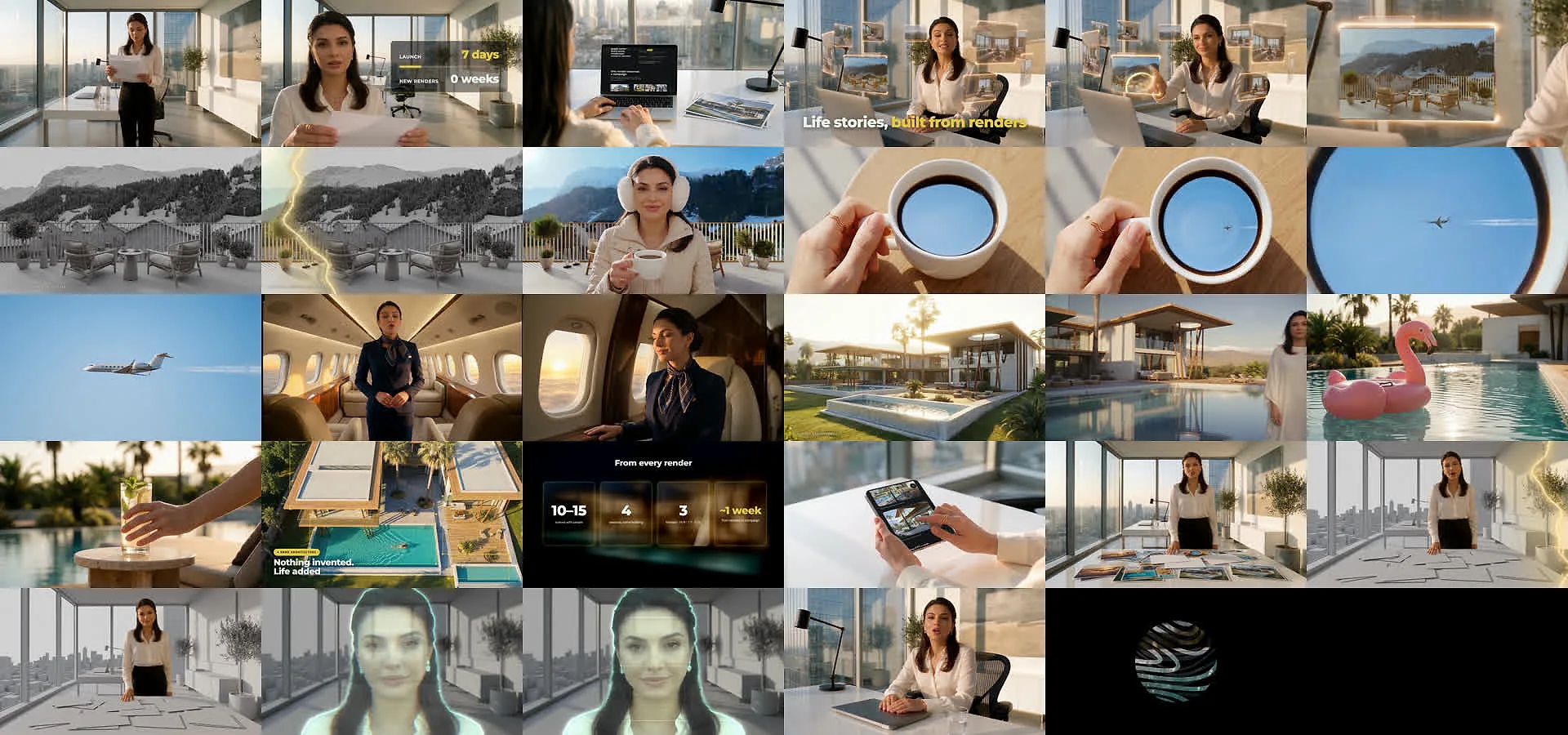
- A film of 1 min 59 s in 16:9
- A vertical 9:16 cut, reframed shot by shot, with burned-in captions
- Two storyboards: 27 panels, then 29 with fixed cameras and lenses
- On-screen graphics, the portal transition and the end card
The result
The film now sits under the first screen of this site, on the process page and on YouTube.
The film, 16:9, 1 min 59 s
The vertical cut for Reels and TikTok, with captions
AI-generated video. The presenter is a fully virtual character.
We explain the same thing on every call: a developer sends a few renders, and we send back the life around the architecture. This film says it in two minutes, and it is built the way we build client campaigns. Nothing in it was shot with a camera.
The first idea: one villa, two worlds
The first script used a single project, a villa with a pool we rendered in 2020. The whole film was to come from its three renders, and the viewer would be told so. It opened in a render world: still water, palms that do not move, no people. The presenter walked through it, snapped her fingers, and the world switched on.
We liked the device and dropped the script. One property shows one transformation, and a marketing team needs to see that the method works on their kind of property too.
What changed: three transformations
The second script keeps one rule and repeats it. A card shows a clean, empty render. The presenter touches it, the render fills the frame and becomes a place with weather, people and movement. It happens to a chalet terrace in winter, then a private jet carries the story to the villa. By then the viewer has worked out the mechanics without a line of explanation.
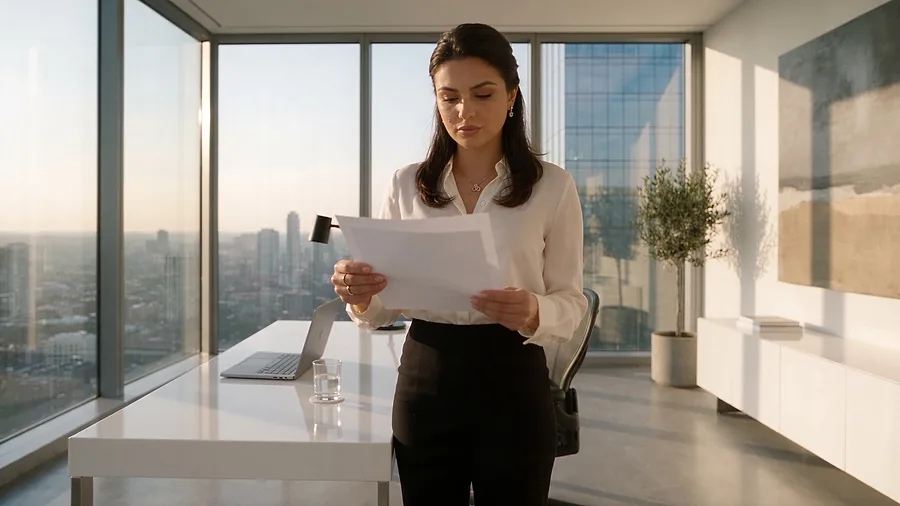
The frame around it is “little, then a lot”. The film opens on three sheets of paper in the presenter’s hands and closes on the same desk covered in prints. The hook moved forward as well: the problem, the question and the burst of cards all land in the first fifteen seconds.
Storyboards and a rulebook for the office
We drew the film twice before generating any video. The first storyboard fixed the story in 27 panels. The second, 29 panels, fixed how it is shot: a lens for each type of frame, one plane of focus, and one time of day for every office scene, late afternoon with low sun from the left.
The office exists only in this film, so it needed the rules a real location gives for free. We set three camera positions and made a reference plate for each, plus a grey clay version of the same plates for the ending. Every office shot starts from one of those plates, so the desk, the lamp and the olive tree stay where they are.
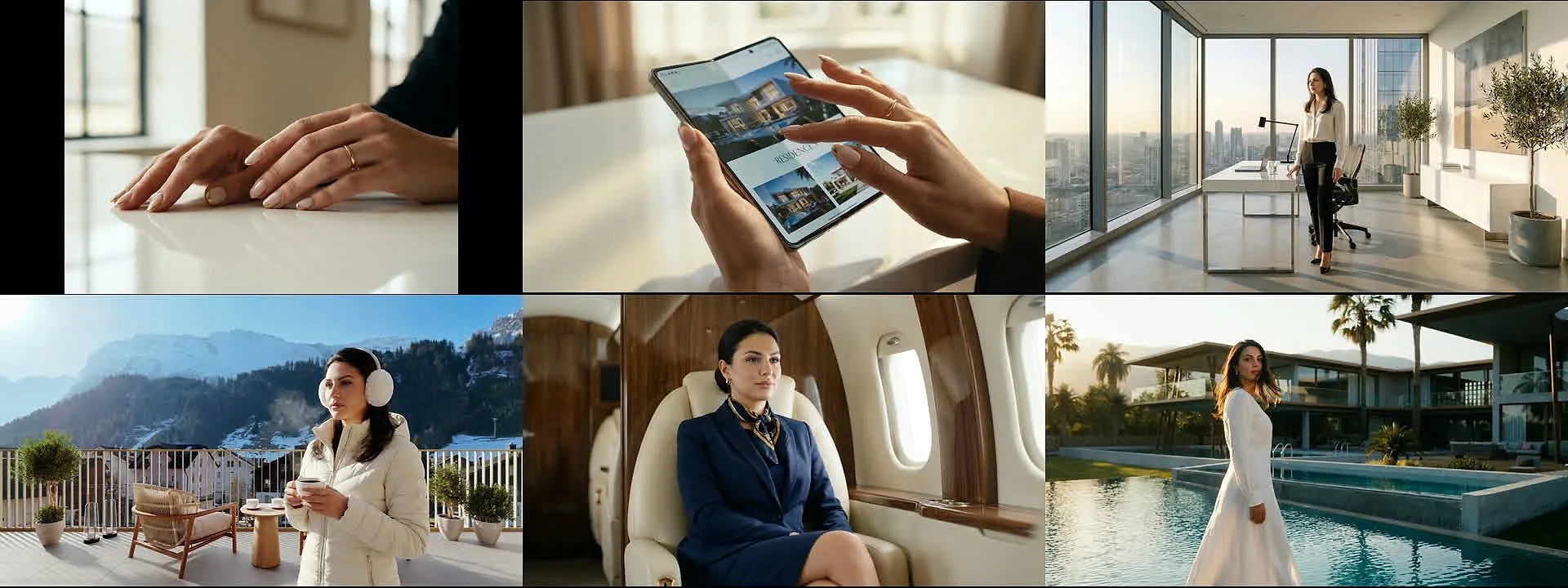
The presenter got the same treatment. Her hands are a second identity: the same manicure and ring appear when she holds the prints, takes the lemonade and opens the phone, so the viewer knows her without seeing her face. She has four wardrobes, one for each world.
Editing ideas
The portal has one rhythm every time: render, grey clay, a wave of colour, life. Holding the clay for less than a second was enough. Any longer and the film stalled.
The cut from the chalet to the jet is a single move. The presenter looks into her coffee, a plane crosses the reflected sky, the camera dives into the cup and comes out among the clouds. There is only ever one plane, and it flies right to left in every shot.
Music and voice are cut against the picture. The track is shifted so that its drop lands on the click of the laptop. Lines start a moment before their shot or run on over the next one: “The architecture stays exactly as designed” plays over water spilling off the pool edge. Locked-off shots got a slow push-in so that nothing sits still.
The vertical cut
The 9:16 version keeps the edit and the mix. Each shot is reframed through a full-height window that follows the action, the top-down view of the villa is rotated instead of cropped, and the captions are burned in for viewers who watch without sound.
The twist
The presenter ends by saying she is not real. We put a second reveal under the first: the office behind her turns back into clay, because that room was generated too. It is the wave the viewer has already watched bring the renders to life, run in reverse.
Architecture shown: Schürch Architekten · Studioforma. 3D visualization: River Black. The film’s chapters and transcript are in Insights. For a client project, read how a story film and a virtual presenter are made.
The renders
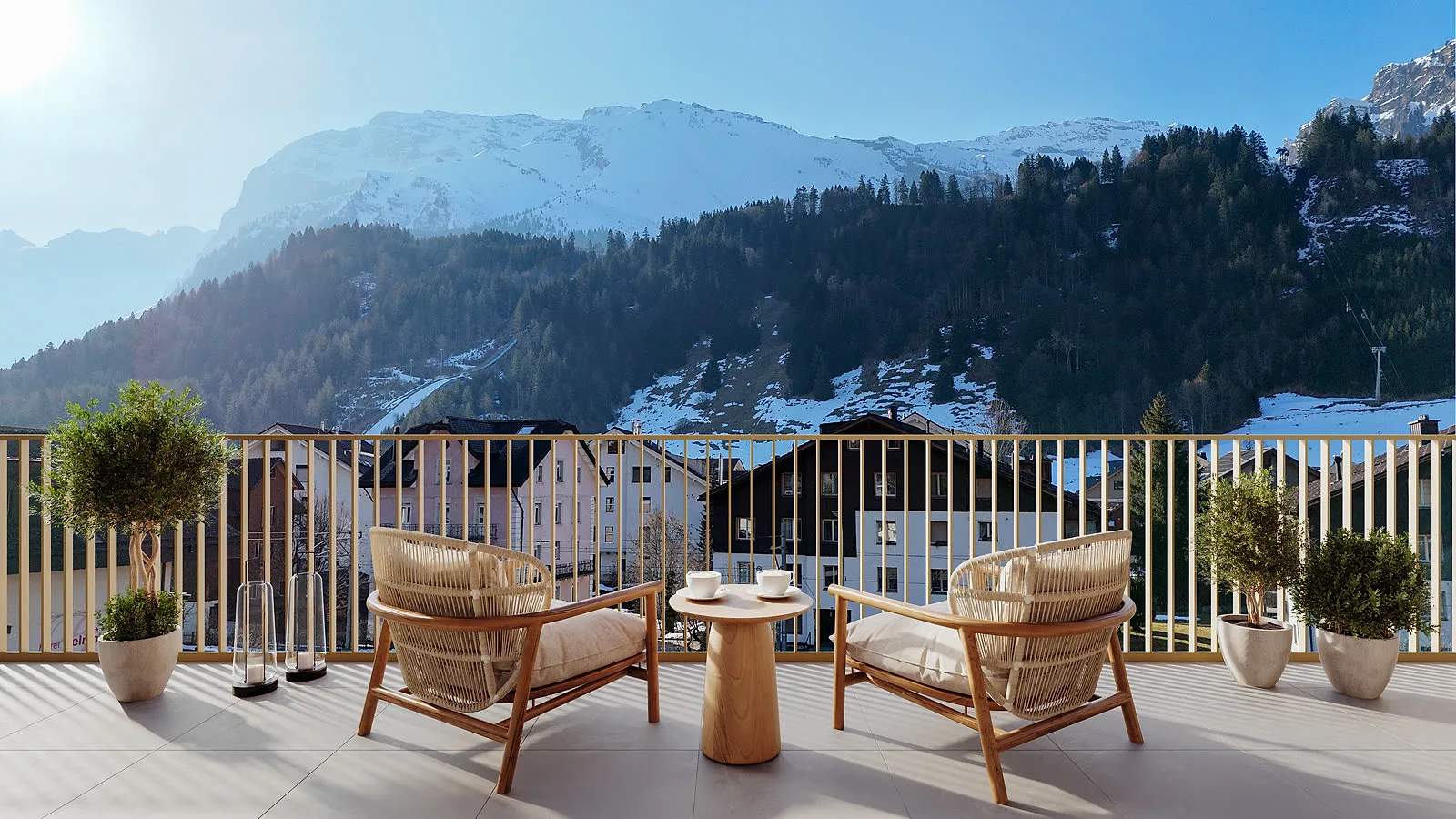
Source render one: a terrace in the Alps

Source render two: the villa and its pool

Source render three: the upper terrace of the villa


The campaign built from them
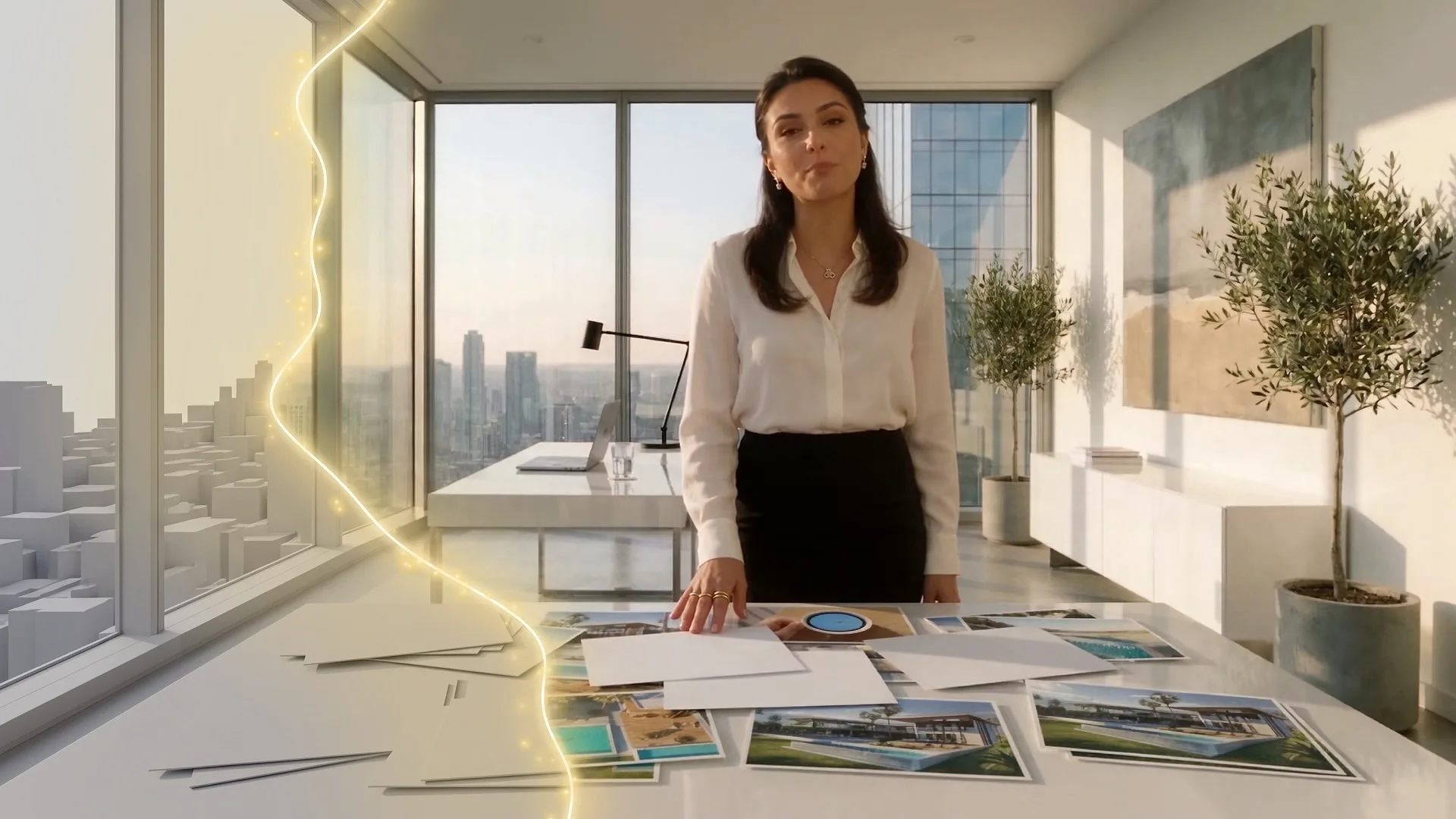
The reveal: the office behind the presenter turns back into grey clay
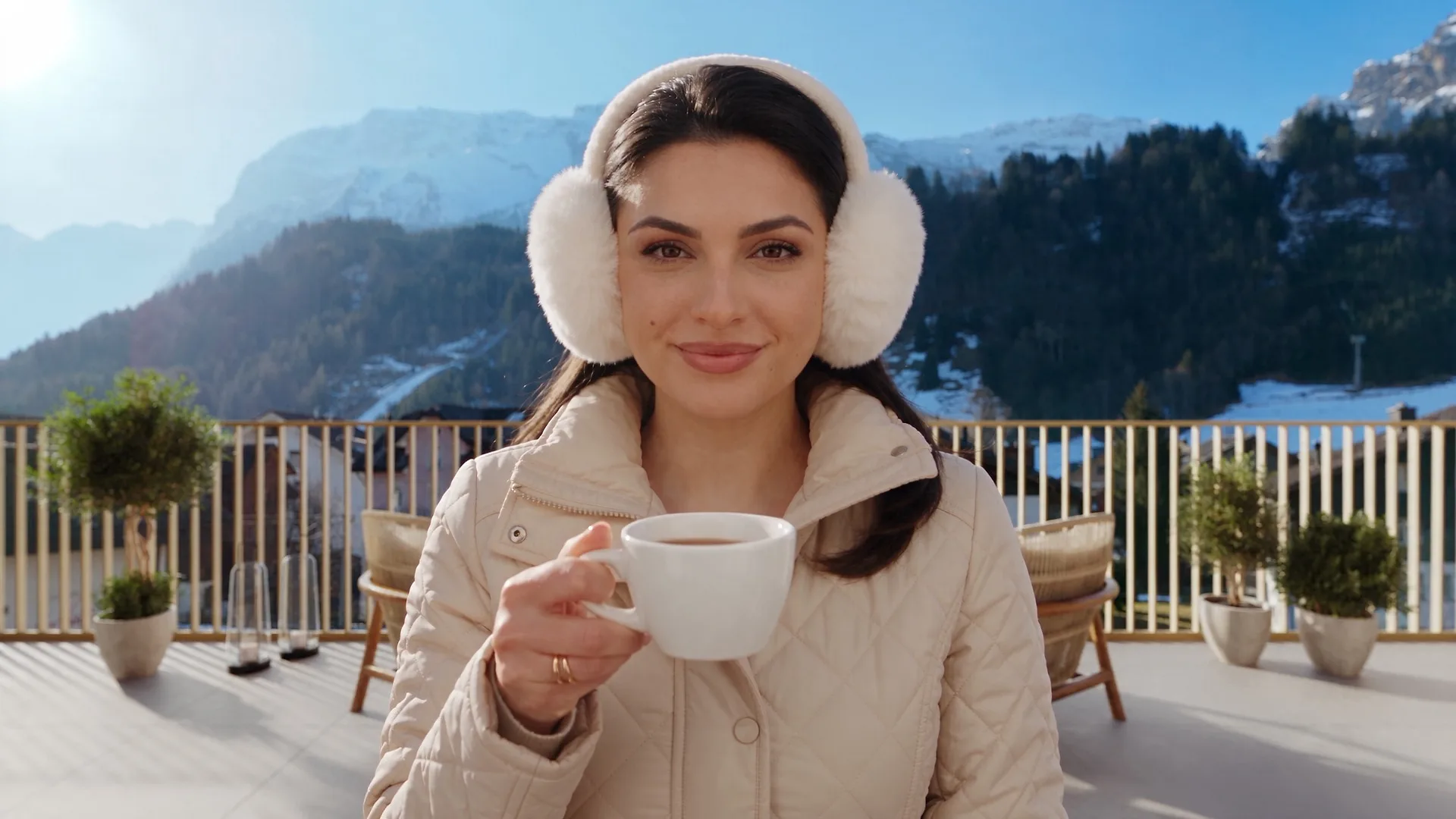
The terrace render brought to life: steam over the coffee, a presenter in earmuffs
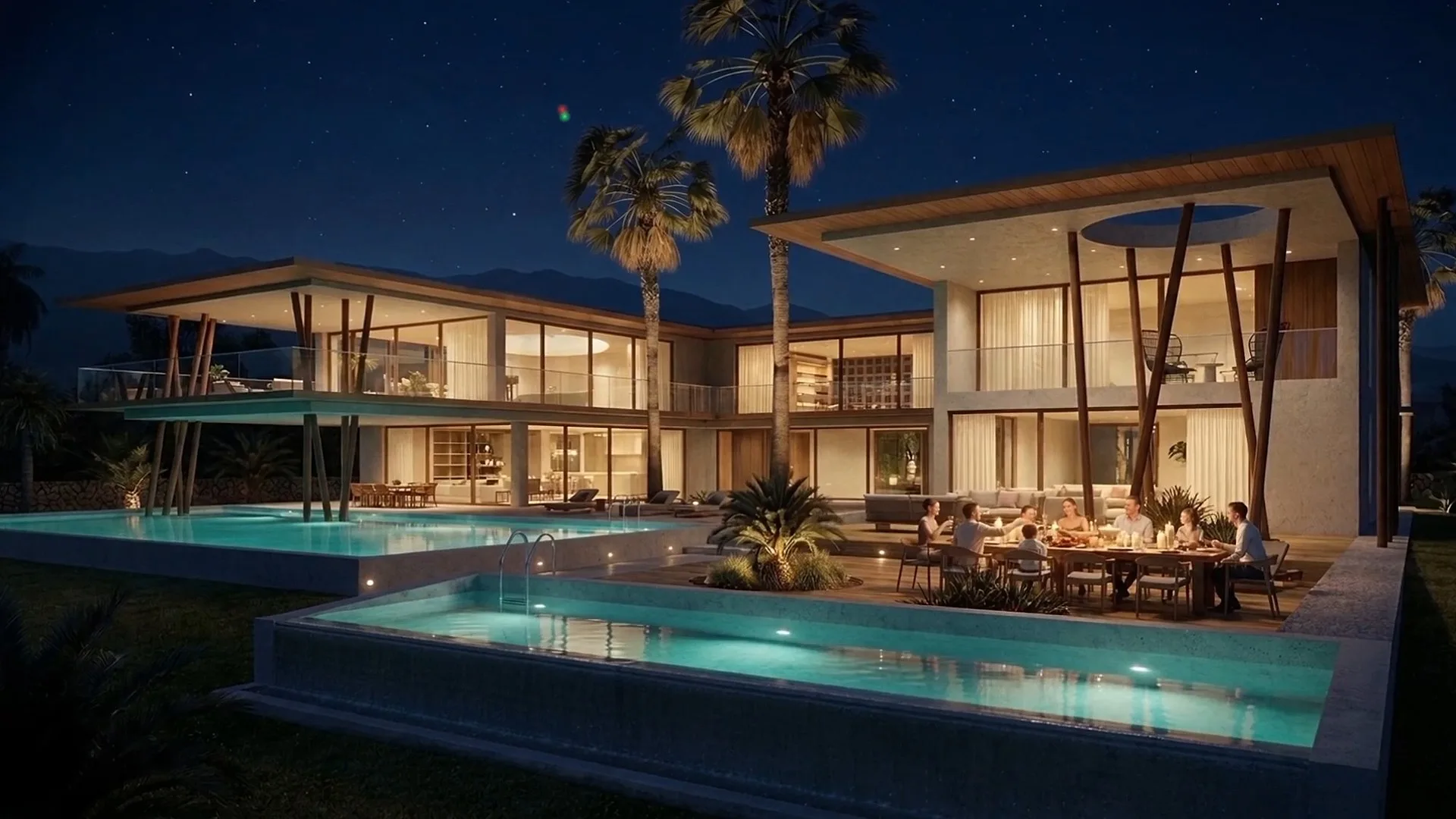
The villa at night, with a family dinner on the deck
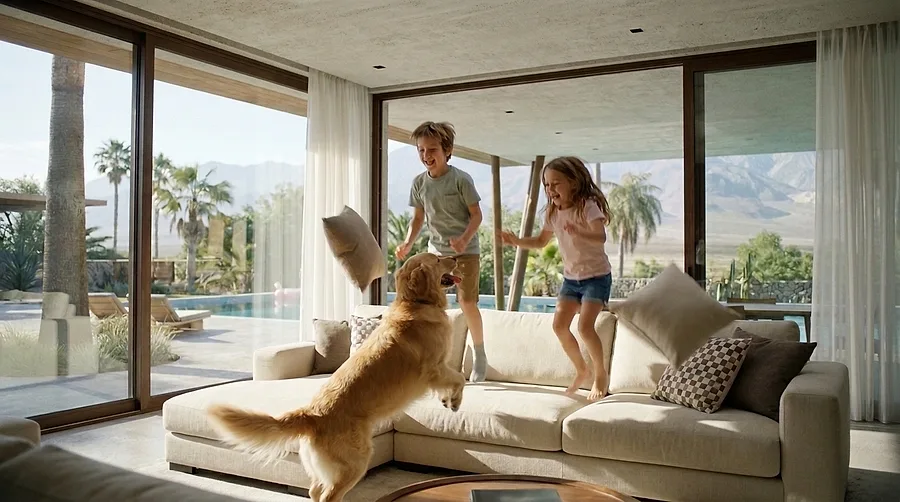
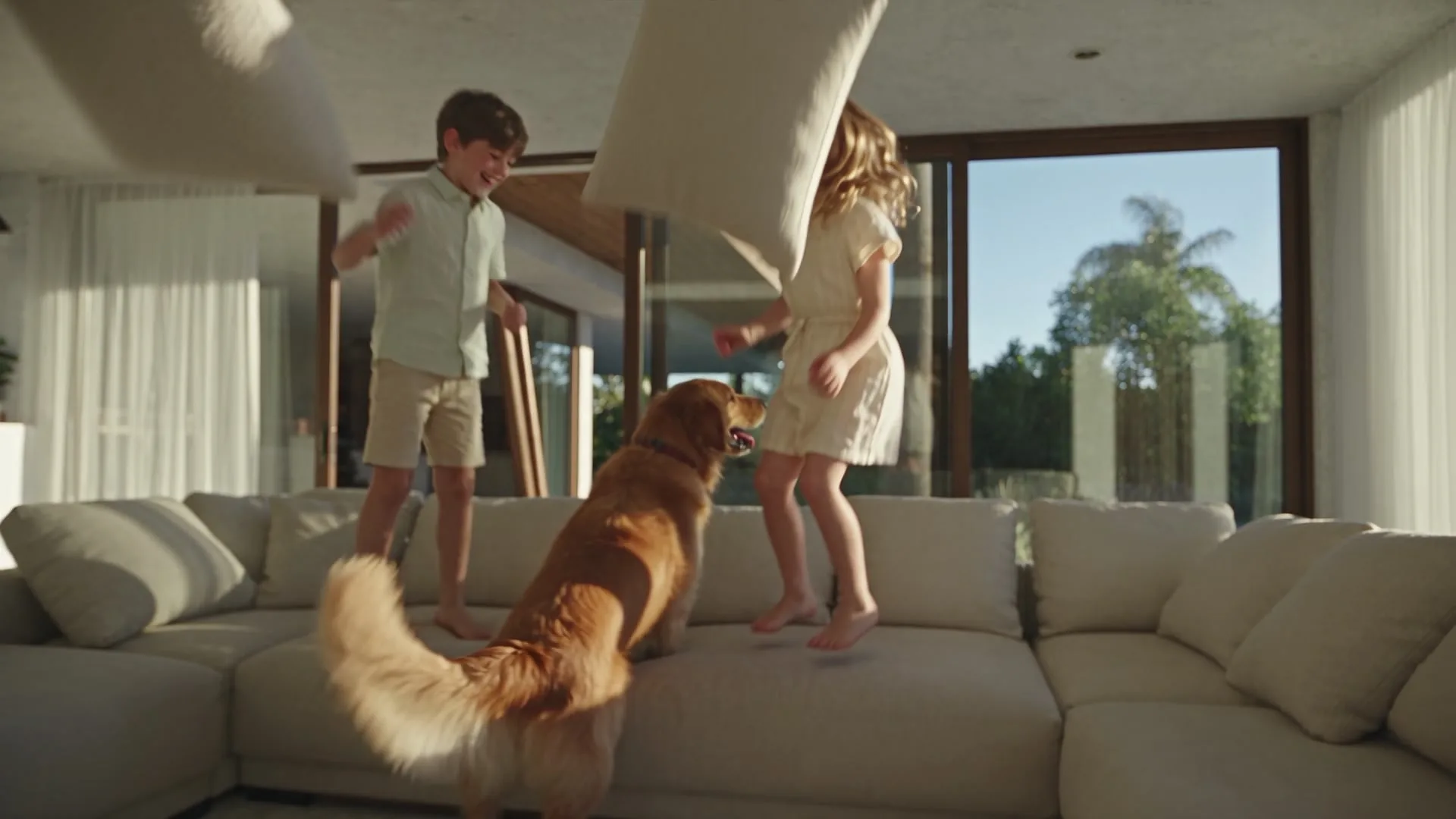
Pillow fight in the villa living room, as drawn in the storyboard
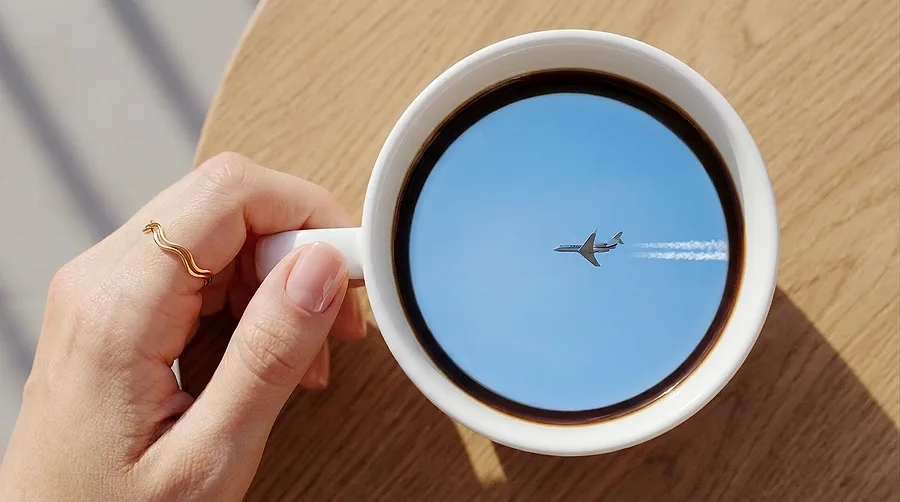
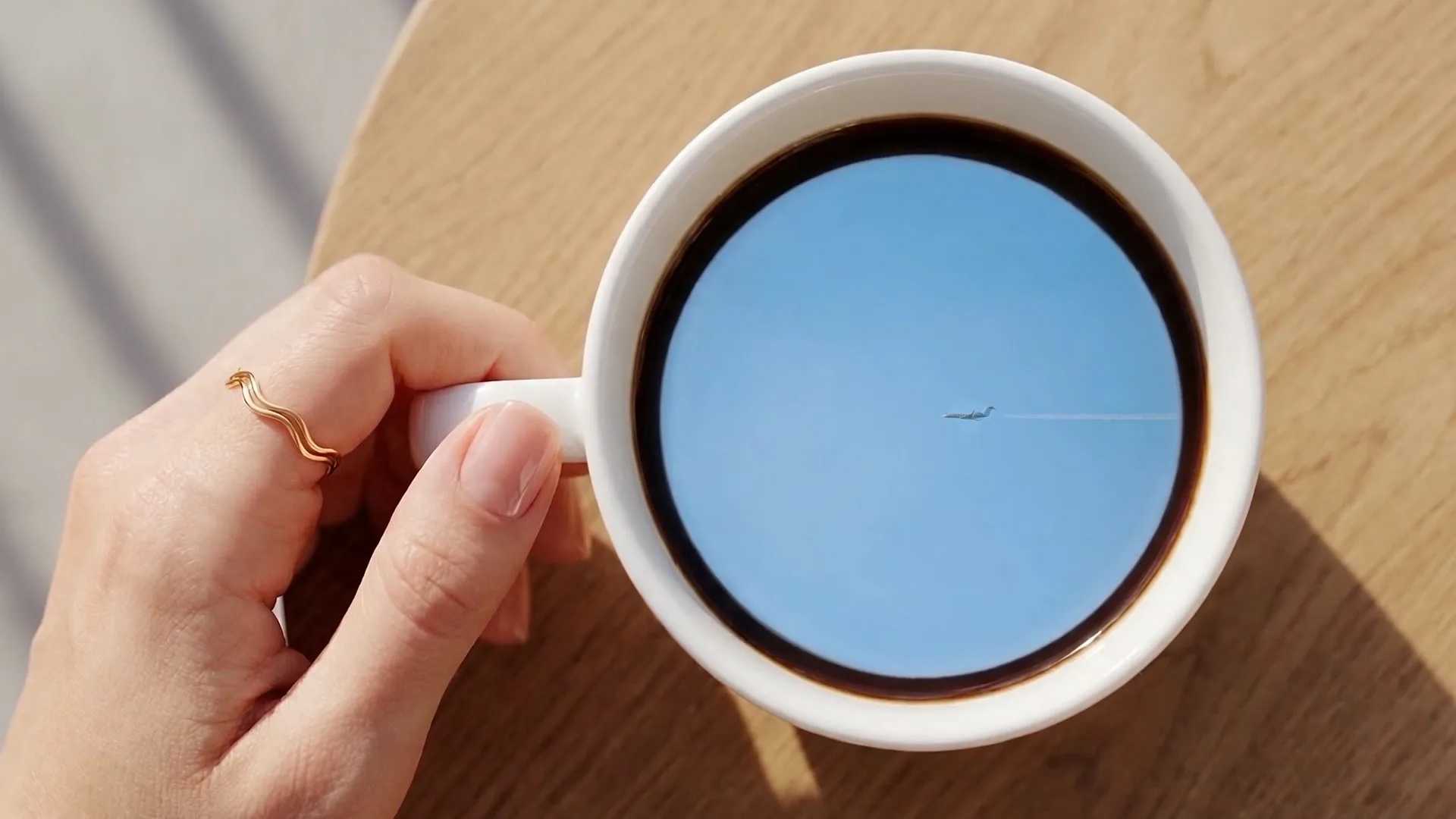
A jet crossing the sky in a cup of coffee: the cut from the chalet to the cabin
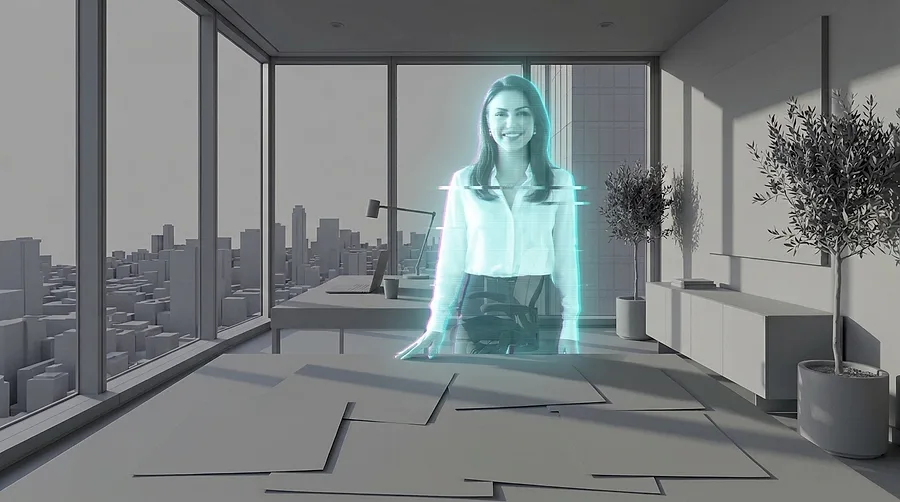
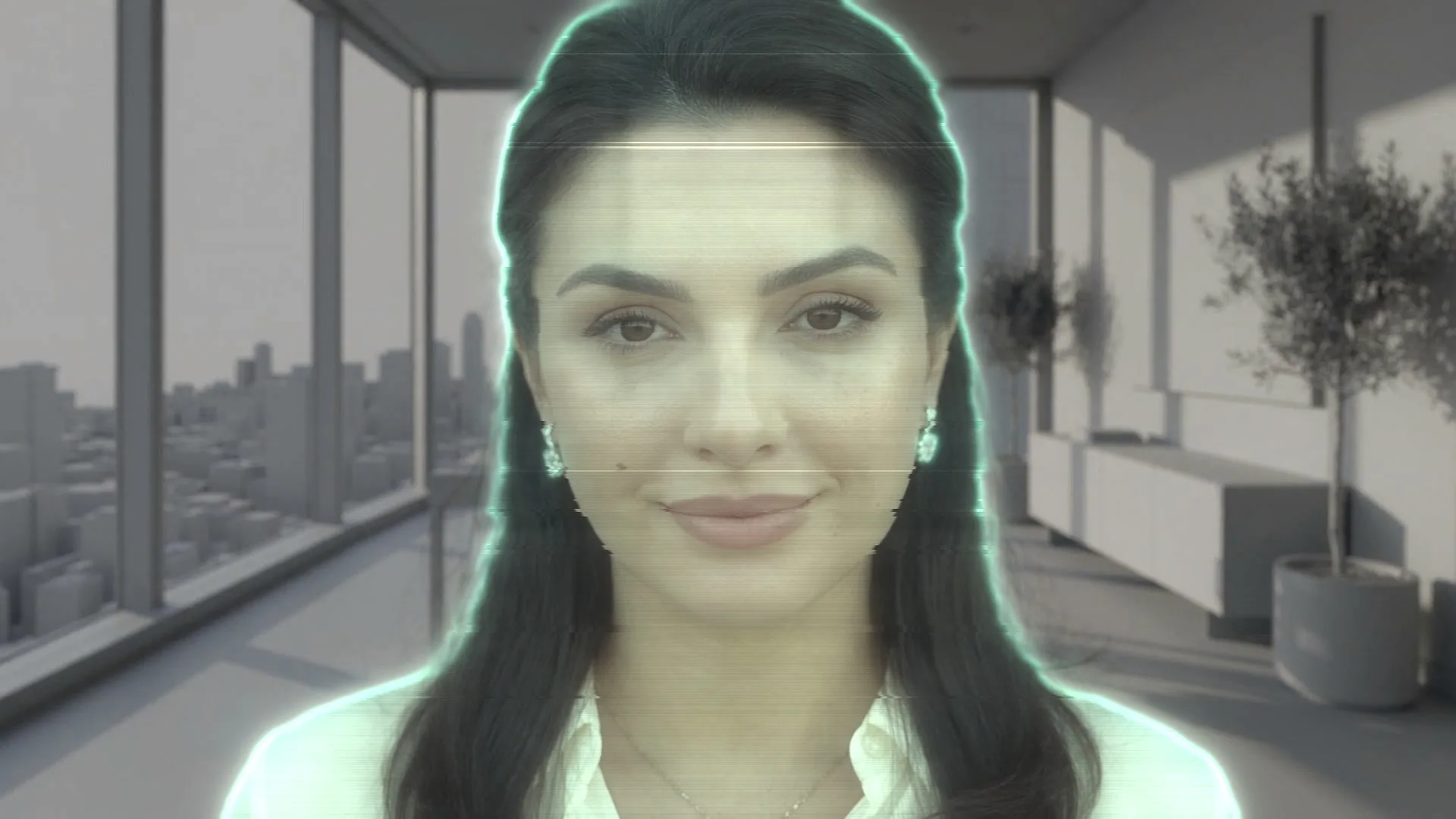
The twist: the presenter as a hologram in a clay office
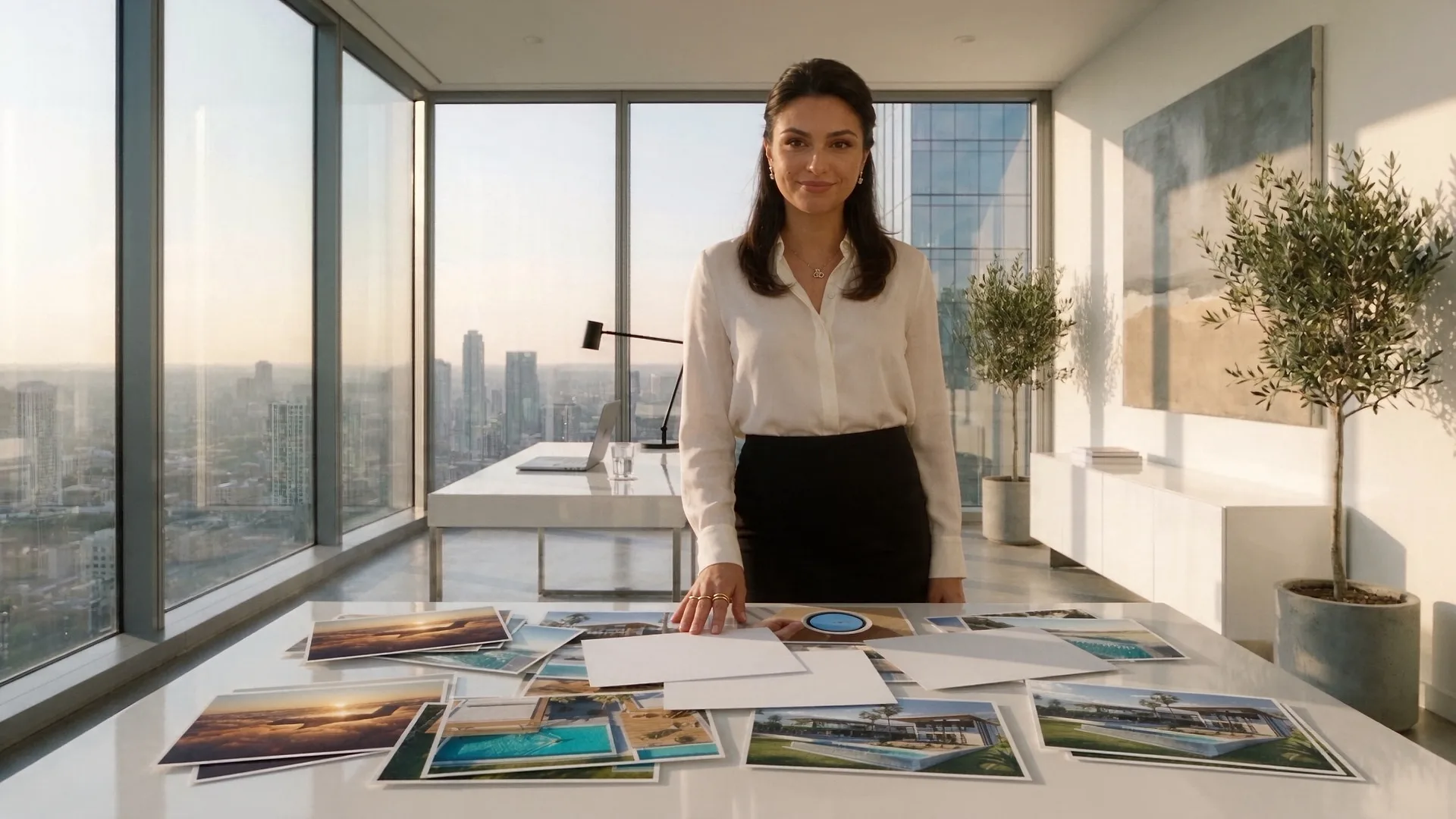
The closing shot: the same desk, now covered in prints
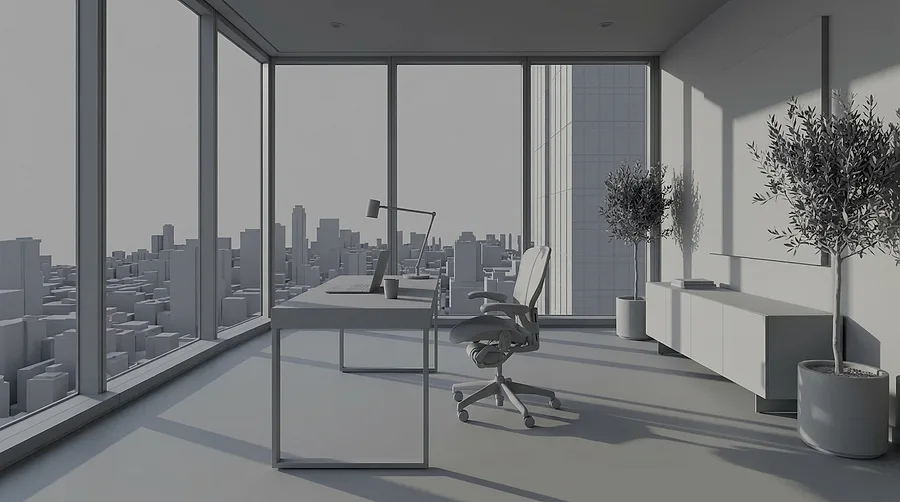
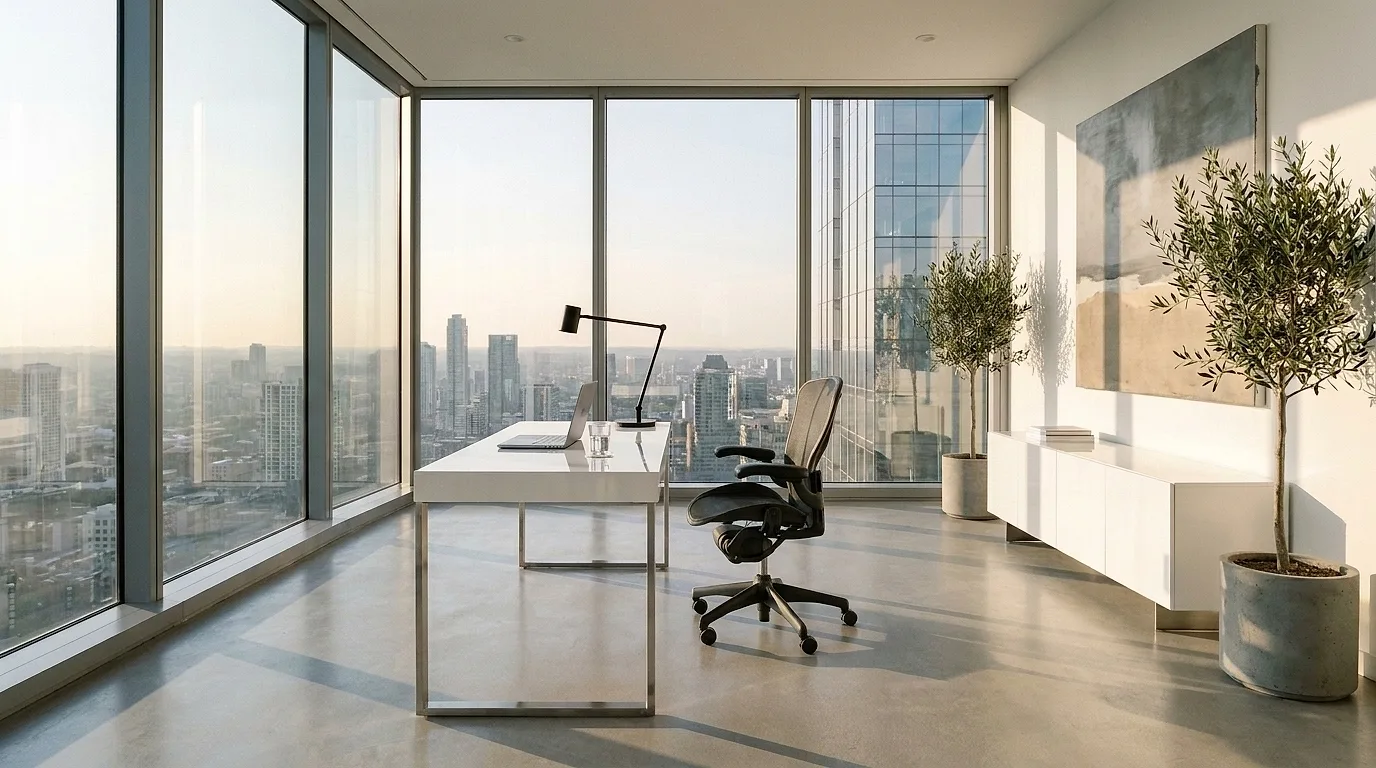
One of three fixed camera positions in the office, with its clay twin
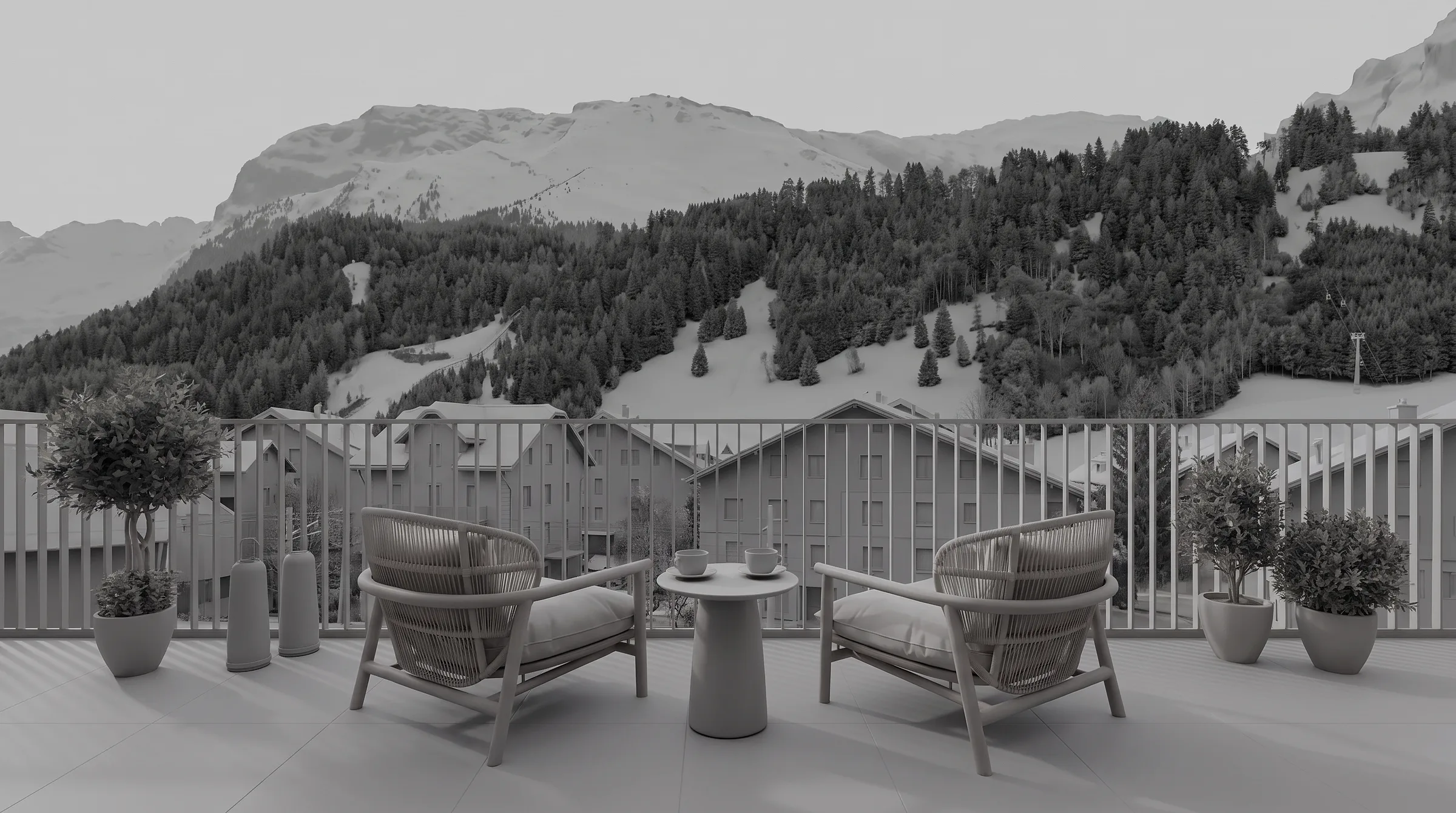
The terrace as grey clay, the middle step of the portal
The second storyboard
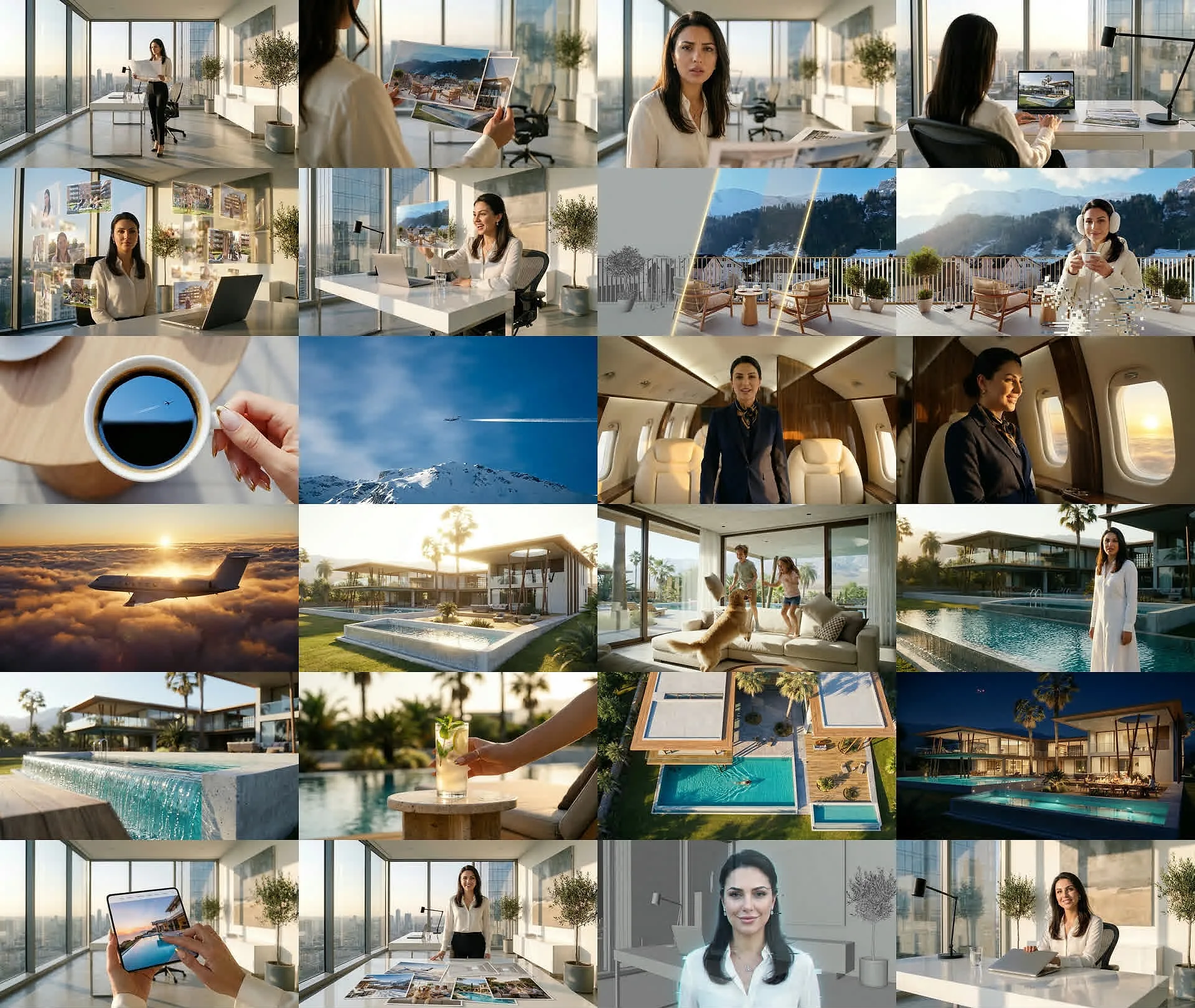
The final cut in thirty frames
The presenter's reference sheet: hands, the phone shot and four wardrobes


Generated from the renders above. AI-generated material. We label AI content under the EU AI Act. How we label AI content
The renders this campaign was built from
More campaign work
All


Discuss your project
Send drawings, a brochure or a few renders. We come back with a plan and a price.