
guide ·
Real estate marketing video: what developers need before the building is finished
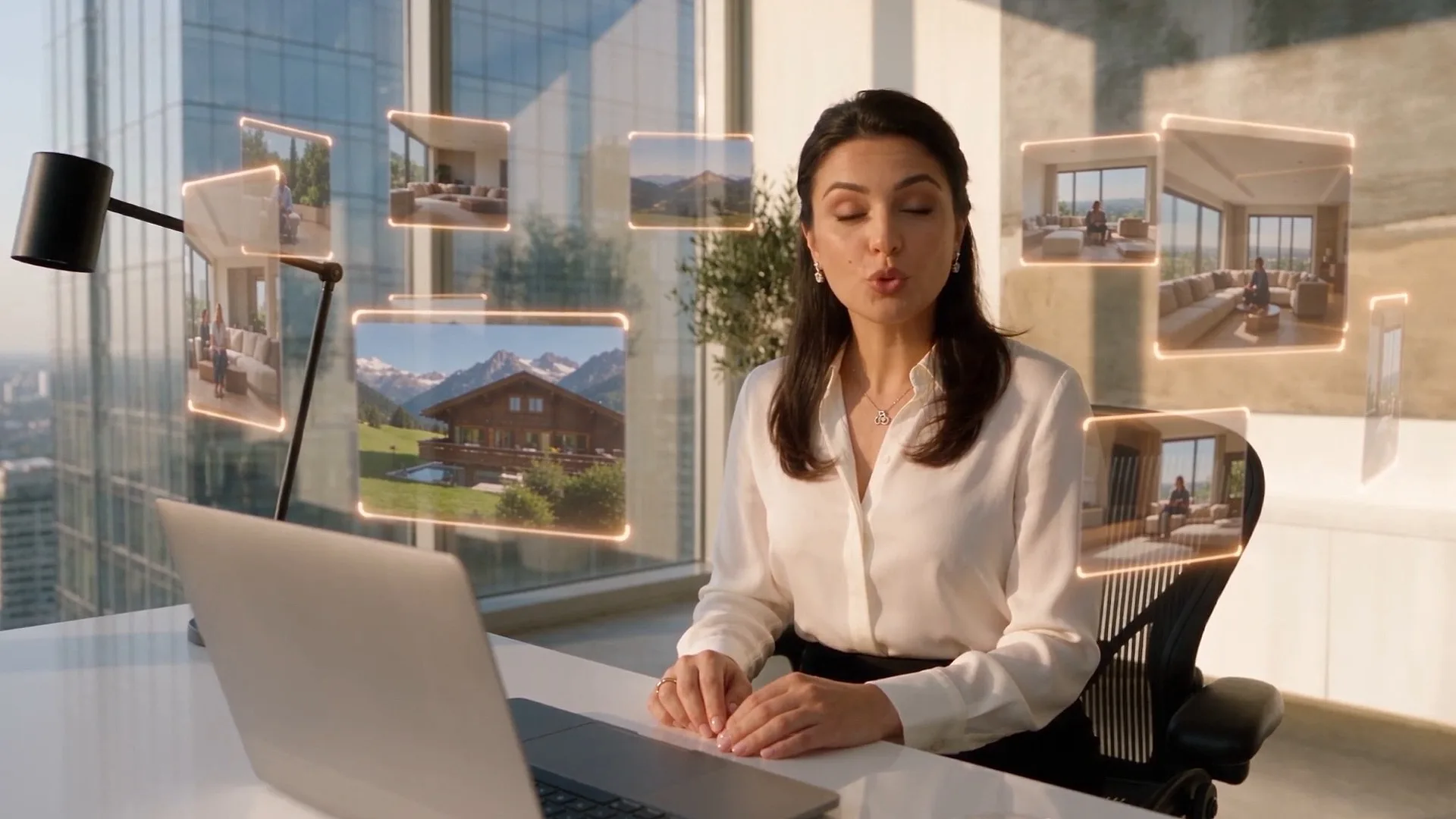
A developer needs four videos before the building is finished: a presenter clip, a story film, short cuts for paid social and a seasonal refresh, released in step with construction stages. All four are built from renders and the brochure, so they exist at launch. A presenter clip takes three to five working days; a story film four to seven.

The video problem is a calendar problem
A development usually goes on sale between permit and foundation. The building will not be shootable for many months, sometimes more than a year. A film crew, a drone and a finished lobby are all unavailable, yet the buyer is already online, comparing projects, and watching video to do it.
NAR’s 2025 Profile of Home Buyers and Sellers found that 52% of buyers used an online video site in their home search (41% of first-time buyers, 54% of repeat buyers), and 58% of buyers rated online video sites very useful (NAR, 2025 Profile of Home Buyers and Sellers). The same report series shows new-construction demand rising: new-home purchases reached 16% of buyers, the highest share since 2006. More buyers are looking at projects that are not finished, and they want video of them.
So the question is not whether to make video. It is which video to make at which stage, with only renders in hand.
What exists at each construction stage
Classic property video follows the building: shoot when there is something to point a camera at. That puts every useful clip after handover. A render-based plan reverses the order, because the source material is the render, and the render exists on day one.
| Stage | What exists | Video to release | Time to make |
|---|---|---|---|
| Permit and launch | Renders, brochure, floor plans | Presenter clip with the call to action | 3–5 working days |
| Foundation to structure | The same renders | Story film, then 15-second cuts for paid social | 4–7 working days |
| Structure to fit-out | Renders, interior views | Seasonal refresh before each sales event | 2–3 working days per pack |
| Final units | Everything above | Small pack for the last apartments, reusing the original cast | 2–3 working days |
The pattern: one production per stage, each cut into several formats. That is how a developer ends up with eight to twelve finished files from two productions instead of twelve separate briefs.
Three real jobs, three lengths
Abstract advice about video length does not help much. Here is what the studio has actually delivered from renders alone.
Metro.ee, Tallinn. A residential project already in sales, with its renders done. One exterior render became ten lifestyle images across four seasons and four short clips of five to six seconds, in horizontal and vertical cuts. No shoot, no new 3D. This is the smallest useful unit: a clip short enough to run as a paid ad, long enough to show people living in the project.
Waterfront residences, Qatar. A virtual presenter introduces the property in English in a single 85-second clip, backed by ten quiet lifestyle scenes of the apartments, the terrace and the pool. This is the launch asset: it explains the project in the time a buyer will give it on a feed.
A pilot for a French property portal. A French-speaking presenter in a 74-second vertical clip for one programme; a 30-second film plus six vertical cuts for another. Same method, different language, different length for different placement.
Across the three, a clip is 5 to 85 seconds. None of it was filmed.
Why a presenter comes first
If only one clip can exist at launch, make the presenter clip. It carries more information per second than any other format: the location, the price band, the delivery date and the call to action, in a voice and face the buyer can recognise on the next post. It also works in the channel where the audience already is, vertical, on a phone.
The presenter is a fully virtual character, never modelled on a real person, and every clip carries the label your legal team defines (see the AI disclosure page). Keeping the same face across many clips is a production problem, not a prompt; consistent people across AI renders explains how the cast is held so the character in month eight is the one from month one.
The story film is the second clip, not the first
A story film of 60 to 90 seconds follows one group of people from arrival to evening. It sells the mood, not the specification, so it belongs on the landing page and in the sales office rather than in a feed. Our own two-minute film was made exactly this way: three renders, 27 storyboard panels reworked to 29 with fixed cameras and lenses, and nothing filmed. You can watch the result in three renders become a full property campaign.
AI-generated video versus classic CGI animation
A classic CGI animation is a fly-through: a camera moves through the 3D model. It is excellent for showing layout, structure and scale, and a developer should still order one for the brochure and the sales gallery. What it does not show is people, weather, season or story, because those cost the same as new modelling and animation time.
Generated video starts from the same renders but adds the life around the architecture, which is what an off-plan buyer is actually deciding on. The two are not rivals. The fly-through answers “what is it?”; generated video answers “what will it be like to live there?” Most developers need both, and only the second one scales to the dozens of short files a social calendar consumes. See how the same logic works for villas in luxury real estate marketing.
What to prepare before ordering
- Two or three renders and the sales brochure. Nothing else is needed for a plan.
- The launch date and the date of each planned sales event, so seasonal packs are timed against them.
- The channels you sell on and the languages of your buyers.
- The person on your side who approves the script. The script is approved by you before production, and text changes at that stage are free.
The order of work fixes the shot list before production starts, so nothing drifts later. The Lite package starts at $1,900 and covers one presenter video, ten images and three short cuts, which is enough to run the first stage of the table above. If you have renders and a launch date, send them and the plan comes back scoped against that date.
Questions on this topic
When should a developer start making real estate marketing video?
At launch, from the renders and the brochure. Waiting for a finished building means the marketing budget and most of the sales window are gone before the first clip exists. A presenter clip and a story film can both be ready within two weeks of approving a script.
What should a developer film while the building is still a construction site?
Very little. Site footage helps investor updates, but buyers decide on the finished life, not the scaffolding. Generate the lifestyle scenes from the renders, and keep real site footage for progress reports where it is the point.
How many videos does a development in sales need?
Four formats cover most of a launch: one presenter clip, one story film, a set of 15-second cuts from both, and a seasonal refresh before each sales event. That is roughly eight to twelve finished files from two productions, not twelve separate shoots.
Related

guide · 10 Sept 2026
Real estate video marketing for developers
Which videos sell a development before it is built, what format each channel needs, and how to make them from renders without a film crew.

comparison · 10 Sept 2026
AI imagery from renders vs a photoshoot: what each one can and cannot do for property marketing
A photoshoot needs a finished building. Renders exist before it does. A plain comparison of the two routes for a developer campaign, and where each one wins.
guide · 30 Sept 2026
Three renders become a full property campaign: nothing was filmed
Watch three architectural renders become a chalet in winter, a private jet and a family villa. Two minutes, seven chapters and the full transcript.


See this on your own project
Send a brochure and two or three renders. We come back with a plan and a price.